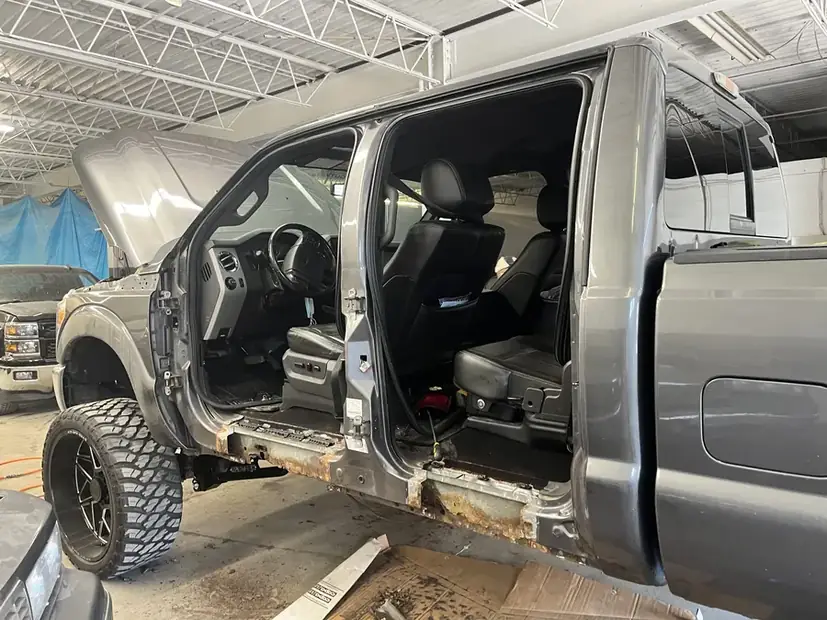
Doors that drop, stick or will not latch, realigned properly, including repairing the structure that let them move in the first place.
 4.9 50 reviews from Cleveland customers
Rated with the BBBArc Wheels Welding LLC, since 2023
4.9 50 reviews from Cleveland customers
Rated with the BBBArc Wheels Welding LLC, since 2023
 Black ownedIndependent shop on Cleveland's southeast side
A door that has dropped is almost never a hinge problem, even though adjusting the hinge is what usually gets tried first. Hinges are steel pins in steel bushings and they wear slowly. What moves quickly is the pillar the hinge is bolted to, once rust has taken the metal behind the mounting plate.
So the honest version of an alignment job starts by finding out whether the door moved or the car did. Adjusting a door to fit an aperture that has sagged gives you a door that closes today and a gap that gets worse.
Rot in the hinge pillar behind the mounting plate, which is the most common cause on any older vehicle and is invisible from outside.
Sill and rocker corrosion, which lets the whole body sag between the pillars and changes every gap at once.
Worn hinge pins and bushings, which is the cause people assume and the least common one on a rusty car.
Impact damage that moved the aperture, sometimes from something minor years ago.
Previous repairs where the door was adjusted to fit a sagging body rather than the body being fixed.
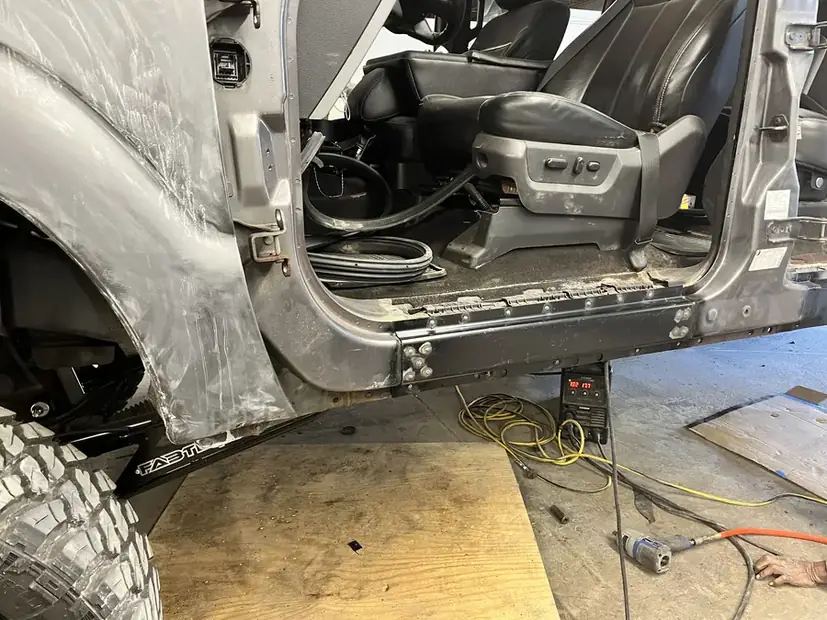
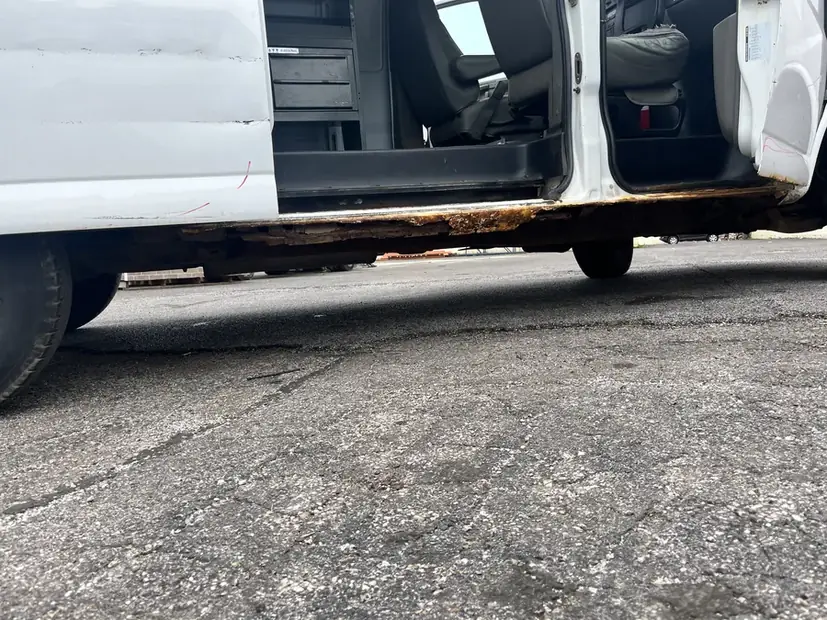
The aperture gets measured diagonally. If the diagonals are unequal the body has moved and no amount of hinge adjustment will produce even gaps.
Rot in the hinge pillar gets cut out and rebuilt with new steel behind the mounting plate, so the hinge is bolted to something rather than to rust.
Sill and rocker structure gets repaired before anything is adjusted, because that is what holds the aperture square.
Then the door gets hung and the gaps set, and they stay set because the thing they are set against is no longer moving.
Adjusting a door to fit a sagging body. It will close when you collect it and it will be worse in six months, and we would rather tell you what the actual job is.
Usually not. Hinges wear slowly. What moves fast is the pillar behind the hinge mounting plate once rust has got into it. Adjusting hinges on a rotten pillar buys you a few months.
Either the door moved or the aperture did. Measuring the diagonals of the opening tells you which in about two minutes, and it changes the whole job.
Yes, once we have established why. A latch that will not engage is usually geometry rather than the latch itself, and replacing the latch on a misaligned door is a common wasted repair.
Yes, and it is often the actual job. Rot behind the mounting plate gets cut out and rebuilt so the hinge has sound steel to bolt to.
Most quotes come back the same day the shop is open. Free, no obligation, and if it cannot be repaired you will hear that straight.