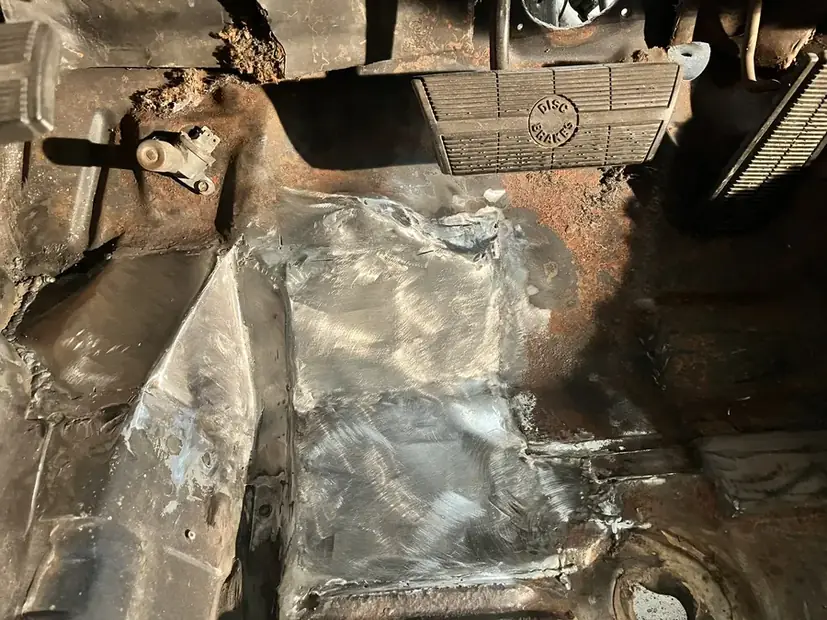
Panels straightened, welded and reshaped to the original lines. Fabricated from flat steel when the reproduction does not exist or does not fit.
 4.9 50 reviews from Cleveland customers
Rated with the BBBArc Wheels Welding LLC, since 2023
4.9 50 reviews from Cleveland customers
Rated with the BBBArc Wheels Welding LLC, since 2023
 Black ownedIndependent shop on Cleveland's southeast side
Vintage panel work is a shaping job before it is a welding job. Anyone can cut out a rusty section and weld a plate in. Getting the crown of a quarter panel to carry through the repair so that a straightedge laid along the body finds nothing is a different skill, and it is the whole difference between a car that looks restored and one that looks repaired.
It matters more on old cars than new ones because the shapes are more complex. A panel from the fifties or sixties has compound curves that a flat patch will never match, so the metal has to be worked rather than bent.
Repair the original where enough of it is sound. An original panel that has been worked and welded is usually a better base than a reproduction, because it fits.
Use a reproduction where one exists and fits properly. Some are excellent. Some are close enough to look right in the box and wrong on the car, and fitting a bad one costs more than making a section.
Fabricate where nothing is available, which on anything unusual is most of the time. A section made to the original profile beats a panel made for a different model that is nearly the same shape.
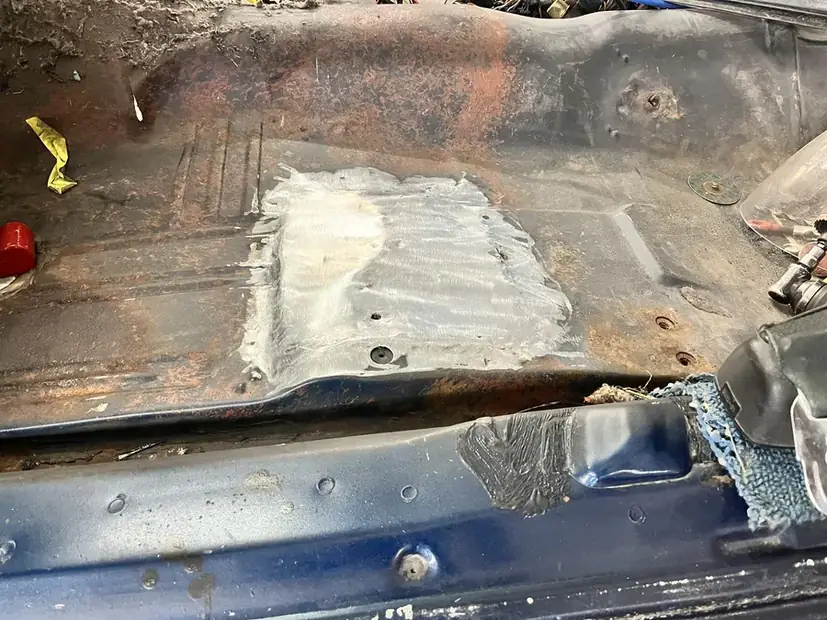
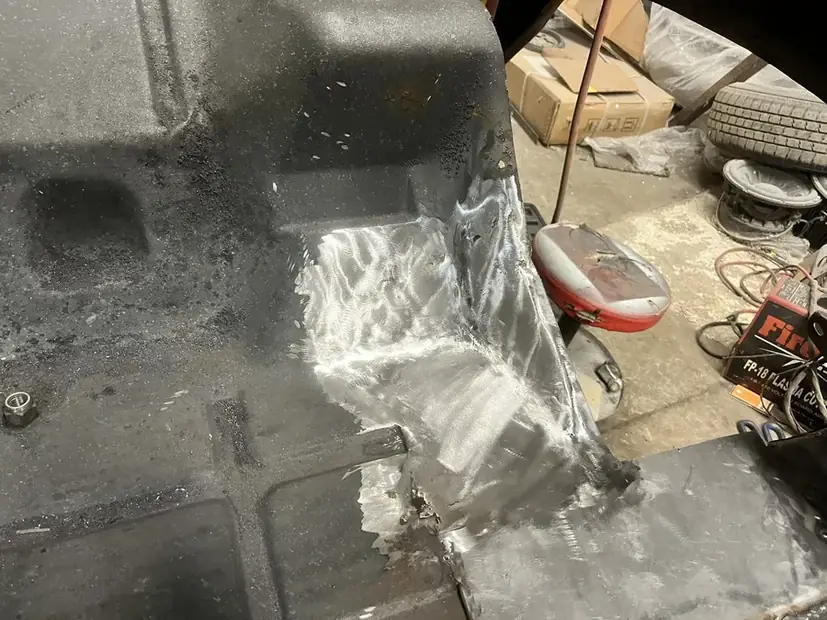
Compound curves get formed, not bent. That means shrinking and stretching the metal so it holds the shape rather than being forced into it, because forced metal springs back and cracks at the weld.
Panels get trial fitted repeatedly rather than once. On a curved section the fit changes as each tack goes in, so it gets checked as it goes rather than at the end.
Welds get stitched with cooling time between, then dressed. Heat is what warps panels, and warp is what forces the next person to reach for filler.
The finished panel gets checked along the body line, not just at the seam.
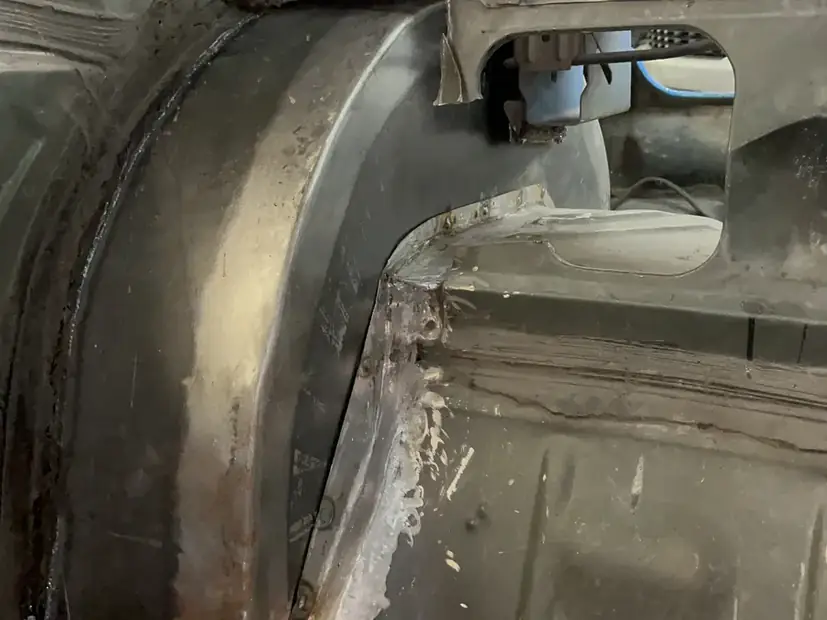
Filler as a shaping method. If a panel needs more than a skim to look right, the metal is not finished and we will keep working it rather than hand it over.
Depends on the panel. Some reproductions fit well and are cheaper than fabricating. Others fit badly enough that correcting them costs more than making a section. Send us the part number and we will give you a straight opinion before you buy.
Yes, and that is the point of doing this properly. A compound curve has to be formed by shrinking and stretching rather than bent, because metal that has been forced into shape springs back and cracks at the weld.
Stitch welding with cooling time between passes, and dressing rather than grinding hot. Warp is a heat problem, and it is the reason a lot of repairs end up buried in filler.
A skim to finish, the way any paint prep involves. Not as a shaping method. If the metal needs filler to look right, the metal is not finished.
Most quotes come back the same day the shop is open. Free, no obligation, and if it cannot be repaired you will hear that straight.