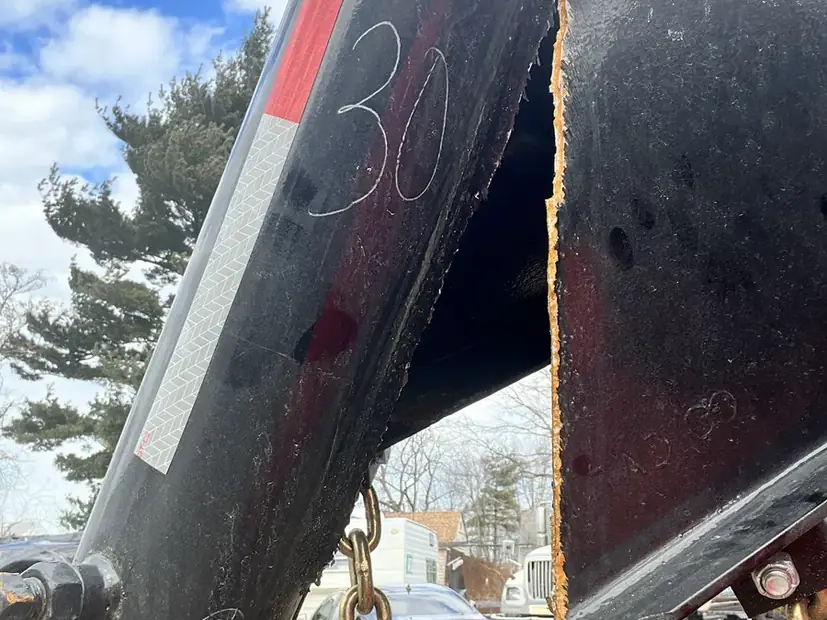
Cracked rails, rotted cross members and torn outriggers cut back to sound steel, rewelded and reinforced at the point that actually failed.
Trailer frames do not fail randomly. They fail where the cross member meets the main rail, because that joint carries every twist the road puts through the deck and it was welded once, at the factory, on a schedule. Ten years of loading, unloading and flexing later, the weld cracks and the crack runs.
The tell is usually a deck that has started to feel soft in one spot, or a hairline you only find because you were looking for something else. By the time a cross member is visibly sagging, the two either side of it have been carrying its share for a while and are on their way out too.
The cross member to rail joint, which is the single most common failure on any deck trailer.
Outriggers on flatbeds, which take side loading nothing designed them for every time something is dragged on rather than lifted on.
The rail itself, at the point where a spring hanger or an axle bracket is welded on, because that weld is a stress riser and a water trap at the same time.
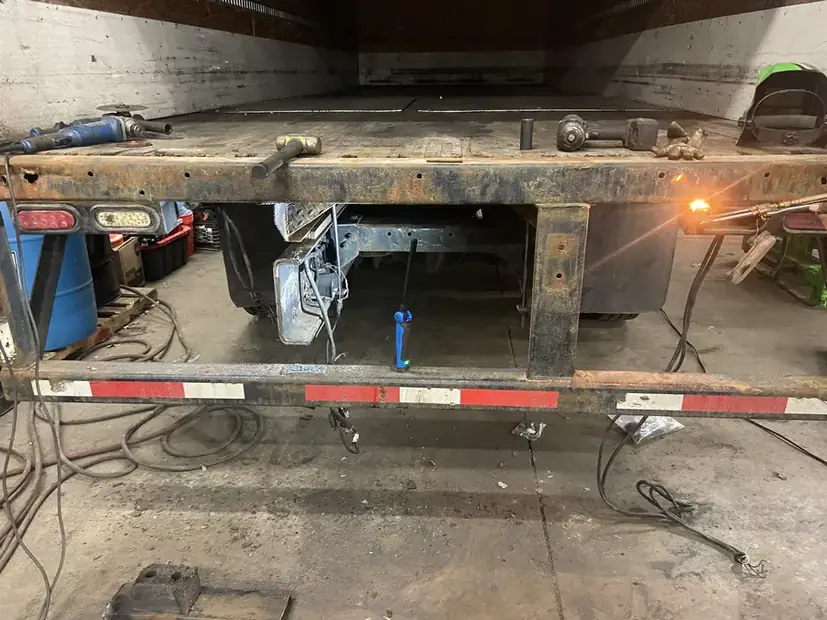
The front and rear headers, particularly on trailers that get loaded nose heavy.
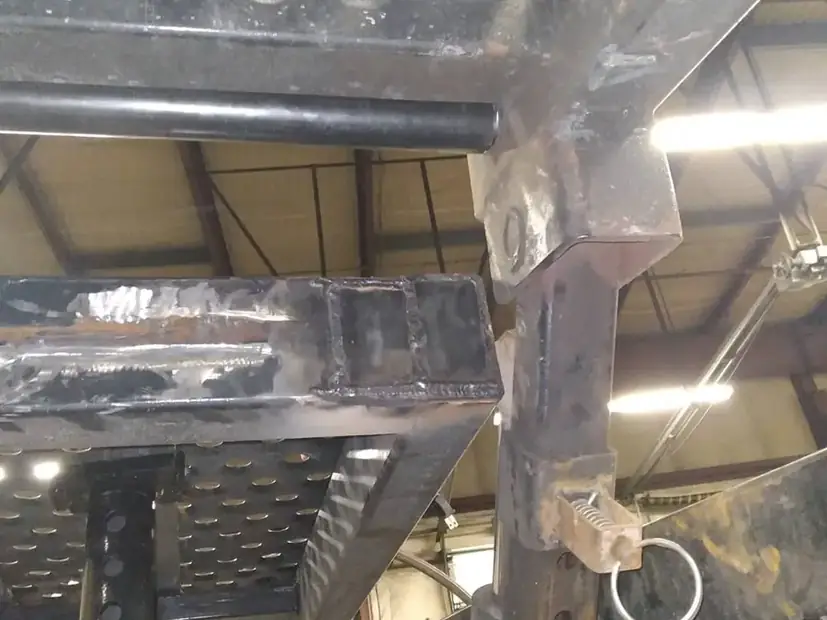
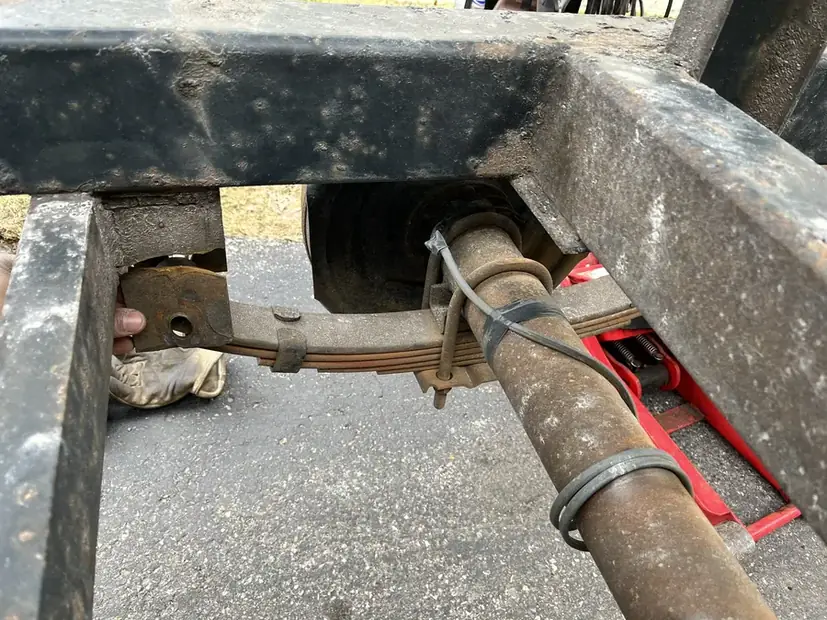
A frame repair that puts the trailer back exactly as it left the factory puts it back with the same weakness. That is why a cracked cross member joint gets gusseted rather than just rewelded, and why a torn outrigger gets a longer weld and a doubler rather than a bead in the same place.
Rot is different from cracking and gets treated differently. Rusted rails and cross members get cut out entirely rather than plated over, because a plate on rot seals moisture against steel and buys you one season.
Everything gets coated after. On a trailer that lives outside in Ohio, skipping that step means the repair is the next thing to rust.
A trailer where the rails have gone soft along their whole length rather than in sections. At that point you are rebuilding a frame around old steel, and buying a used trailer is the better deal. We will say so.
The deck usually goes soft or springy over one spot before anything is visible. Get underneath and look at the joints where the cross members meet the main rails, because that is where it starts, and a crack there often runs along the weld rather than across the steel.
Almost always welded. A cracked joint is a welding repair and a reinforced one is stronger than it was. Replacement is for trailers where corrosion has taken the rails themselves, not individual members.
Yes, and ideally sweep it out. Anything welded near a load, particularly a load that has soaked up fuel or oil over the years, is a hazard rather than an inconvenience.
Most single member repairs are a day. A trailer needing several members and coating is longer. You get a timeframe with the quote, because a trailer sitting with no end date is the whole problem.
Most quotes come back the same day the shop is open. Free, no obligation, and if it cannot be repaired you will hear that straight.