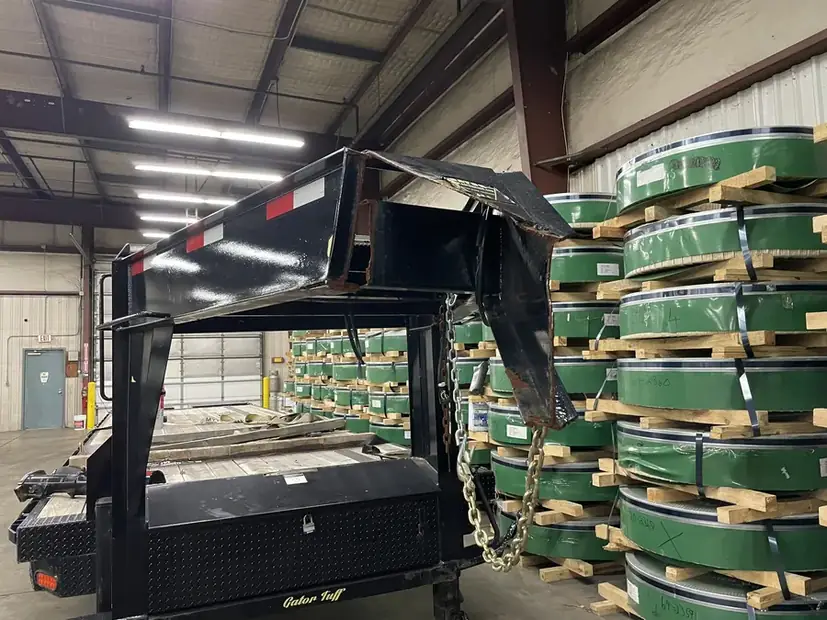
Fifth wheel plates, gooseneck couplers and the frame reinforcement underneath them. The components carrying the entire load, welded accordingly.
A gooseneck or fifth wheel connection carries the pin weight of the whole trailer through a small number of welds. Everything about that connection is heavy section steel and everything about repairing it is different from repairing a bumper pull. The loads are higher, the consequences are worse, and the shortcuts that survive on a light trailer do not survive here.
Most of what comes in is either cracking around the coupler mount or corrosion in the frame reinforcement under the bed, where the gooseneck structure ties into the trailer. Both are found late because the whole assembly sits under a deck where nobody looks.
Cracking around the coupler mounting plate, usually starting at a corner of the plate where stress concentrates.
The vertical gooseneck tube cracking at the bend, on trailers that have been loaded nose heavy for years.
Corrosion in the frame reinforcement that ties the neck into the main rails, which is hidden under the deck and gets found during another job.
Worn or damaged coupler bodies, which are a replacement rather than a weld.
On fifth wheel plates, cracking at the mounting rails and elongated bolt holes.
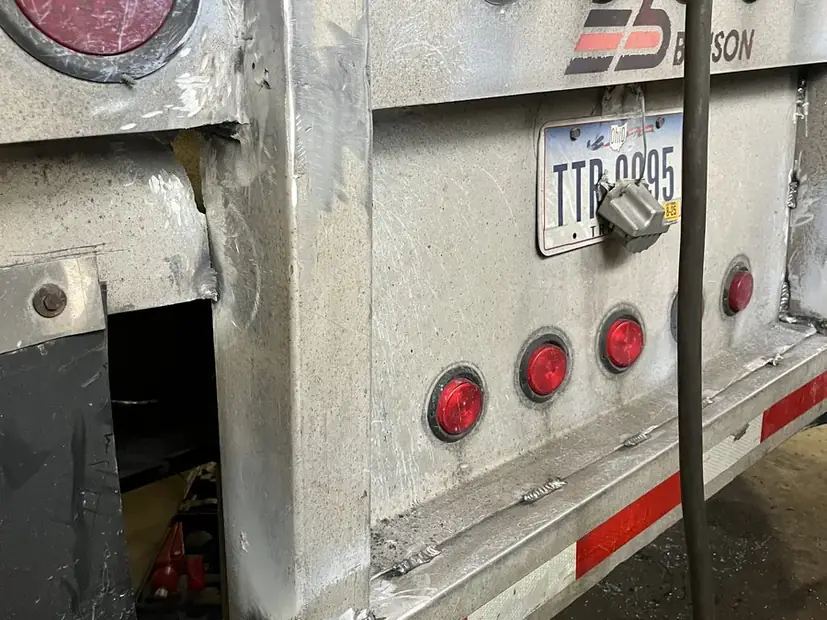
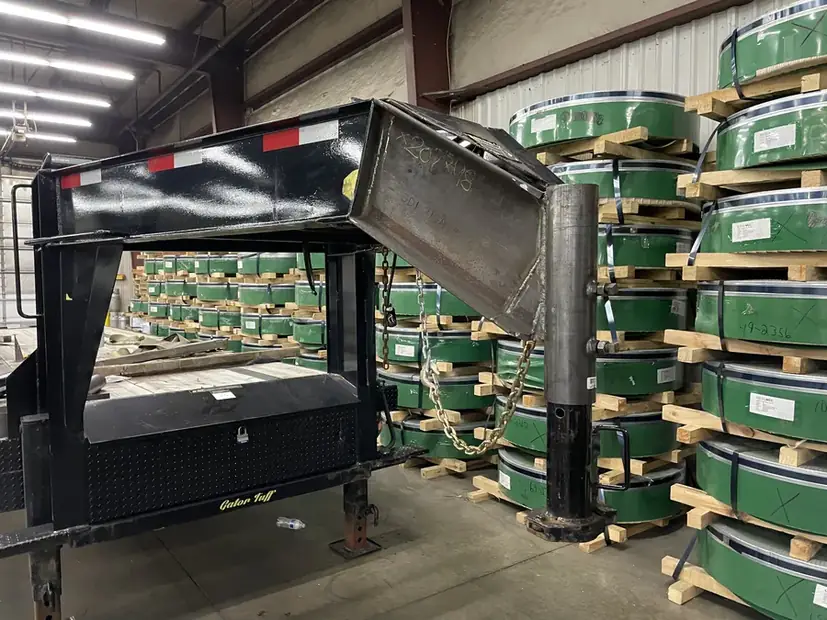
The pin connection is the single point where the trailer is attached to the truck. A repair that would be acceptable on a fender is not acceptable here, and the difference is preparation and penetration rather than anything exotic.
Cracks get ground out fully and welded with penetration through the section, not filled from the surface. Reinforcement gets added at the corners where the stress actually is rather than symmetrically because it looks tidier.
Where the frame under the neck has corroded, that gets repaired before the neck is touched, for the same reason you do not weld a bumper onto a cracked mount.
Worn coupler bodies and damaged locking mechanisms. Those get replaced, not welded, and any shop offering to weld one should worry you.
Yes, and it is common. What matters is that the crack is ground out to sound metal and welded with full penetration through the section, then reinforced at the corner where the stress is. A surface fill on a heavy section crack will reopen.
Clean the area around the coupler mount plate and look at the corners of the plate, then look at the tube where it bends. Under the deck, look where the neck structure ties into the main rails, because that is where corrosion hides.
Yes. Mounting rail cracks and elongated bolt holes both get repaired, and the mounting structure gets inspected at the same time.
Most quotes come back the same day the shop is open. Free, no obligation, and if it cannot be repaired you will hear that straight.