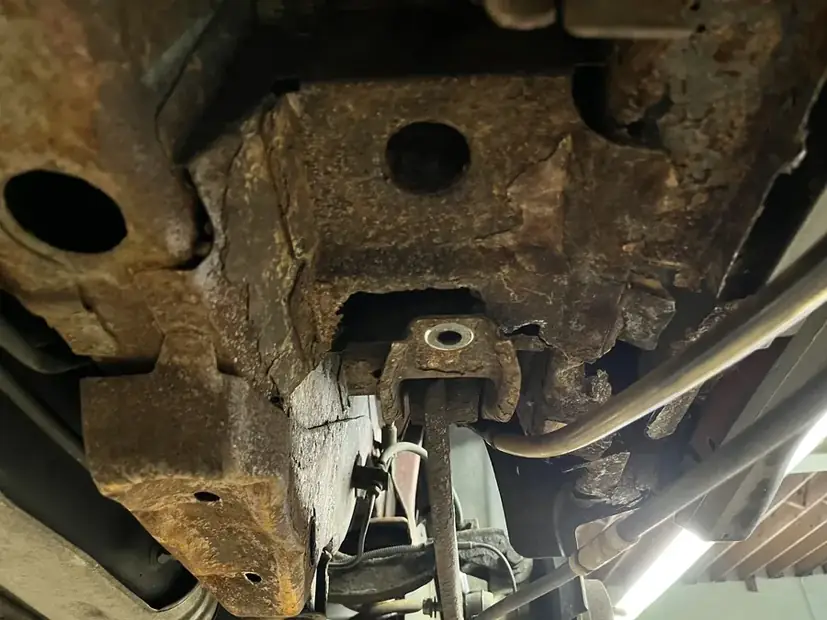
Rotted frame rails, trailing arm mounts, shock towers and subframe mounting points. Cut back to clean steel, plated with new metal, reinforced and sealed.
 4.9 50 reviews from Cleveland customers
Rated with the BBBArc Wheels Welding LLC, since 2023
4.9 50 reviews from Cleveland customers
Rated with the BBBArc Wheels Welding LLC, since 2023
 Black ownedIndependent shop on Cleveland's southeast side
A trailing arm mount does not fail gradually in a way you notice. It corrodes from the inside of a boxed section where nobody can see it, holds fine for years, and then lets go over a pothole. The first sign for most people is a clunk from the rear on turns, or an inspection that comes back with the words perforated and structural on the same line.
Cleveland is hard on these specific parts for a reason. Trailing arm mounts, shock towers and rear spring perches are boxed or seam welded sections that trap salt water and hold it against bare metal through the whole winter. The outer skin looks fine because it is painted. The inside has been rusting since the vehicle was six years old.
Trailing arm mounts are the most common. The bracket that the arm bolts into is welded to the floor or the frame rail, and the rot usually starts in the seam where those two panels meet.
Shock towers go next, particularly on trucks and older unibody vehicles, where the top mount pulls through a corroded tower under load.
Frame rails rot from the inside out at the drain holes and at any point where a bracket, crossmember or body mount is welded on, because every weld seam is a place for water to sit.
Spring perches and subframe mounting points fail the same way and for the same reason, and get found during the same inspection.
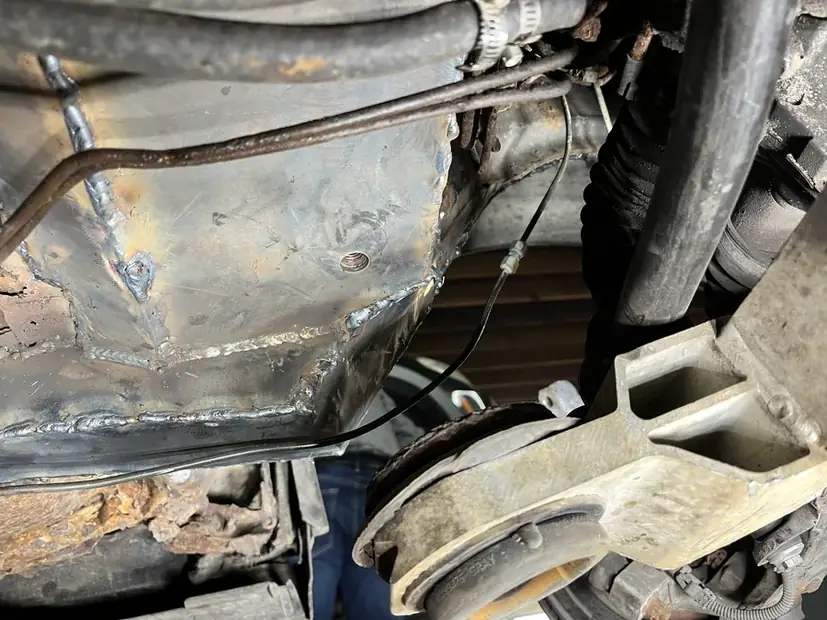
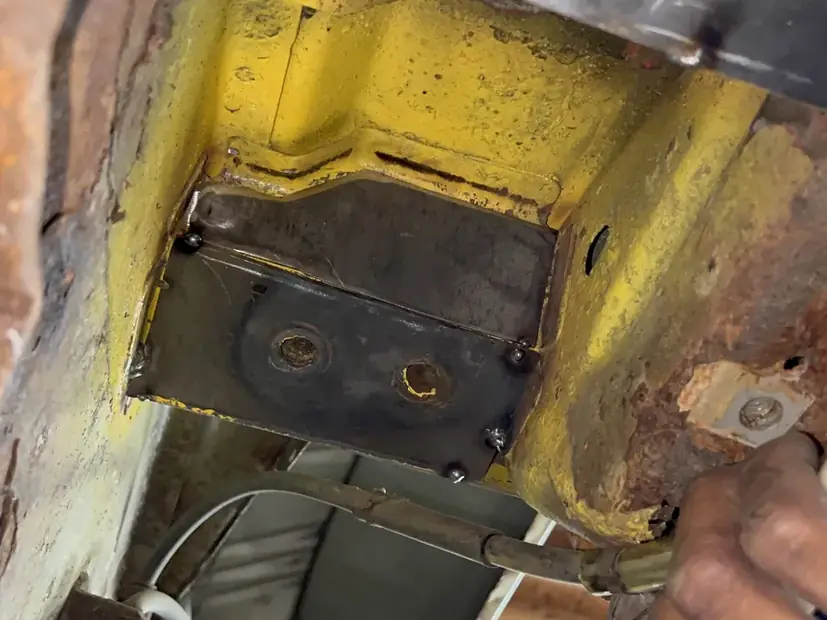
The cheap version of this repair is a plate welded over the rot. It passes a look, it fails within two winters, and it is worse than doing nothing because it seals moisture in against the metal it is supposed to be protecting.
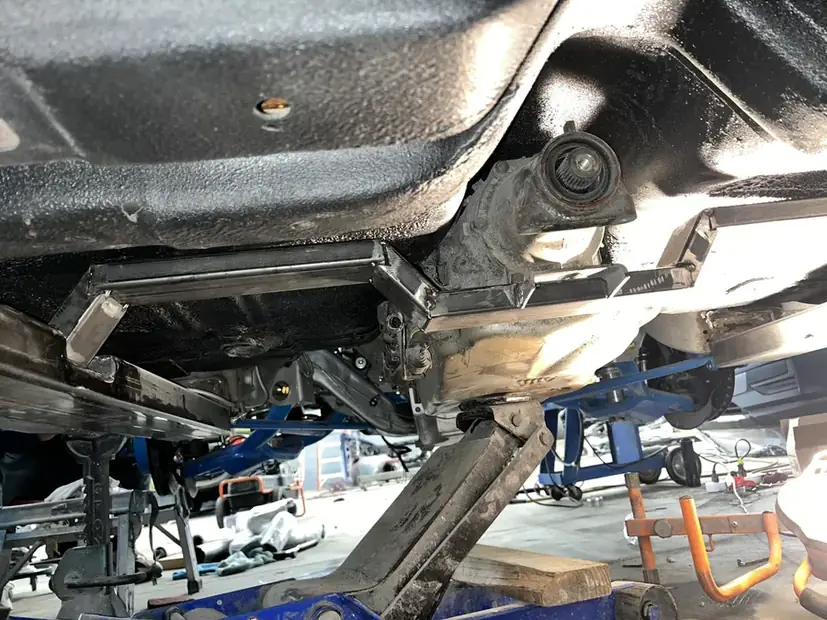
The repair that lasts removes the rotted section entirely, back to metal that is sound when you hit it. New plate gets shaped to match the original section, welded in with full penetration, reinforced where the original design was thin, then coated inside and out. On a boxed section that means treating the cavity before it gets closed up, because that is where the next failure would start.
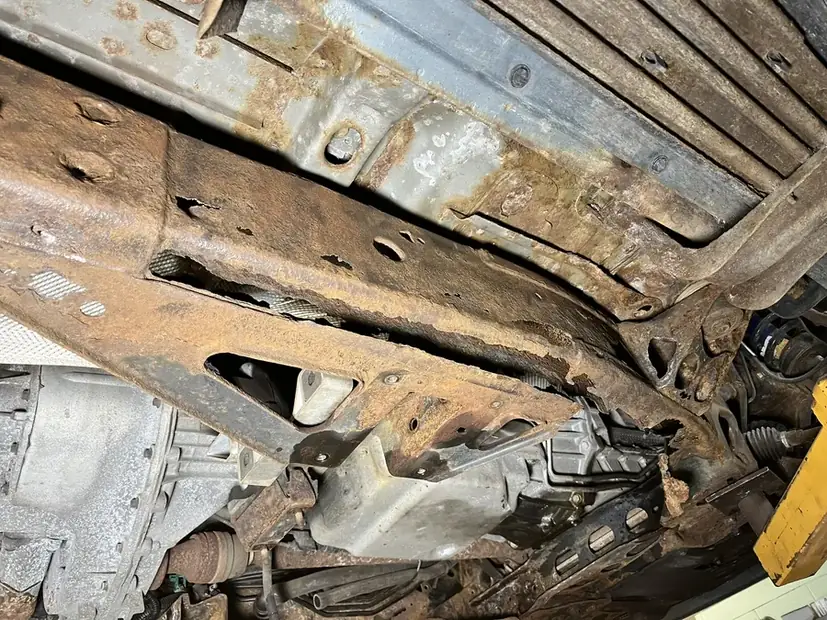
A frame with no sound metal left to weld to. If the rail has gone soft along its length rather than in one section, plating it is putting good money into a vehicle that is finished, and we will say so.
The usual first sign is a clunk from the rear over bumps or on turns, because the arm is moving in a mount that is no longer holding it properly. The second is failing an inspection. If you can push a screwdriver through the bracket where the arm bolts in, it is through and it needs cutting out, not patching.
A properly done one is, and in most cases it is stronger than the original because the section that failed gets reinforced rather than just replaced. What is not safe is a plate welded over rot, which is why we cut back to sound metal first even when it makes the job bigger.
A repair done back to sound steel, welded properly and coated is a repair, not a cover up, and that is what an inspector is looking for. We will tell you before starting if the vehicle is in a state where no repair is going to satisfy an inspection.
Most are a day, some are two depending on how much comes out once it is opened up. You get a timeframe after the vehicle is on the lift, because that is the first point at which anyone can honestly give you one.
Sometimes they are right. Often what they mean is that it is not worth fixing at collision centre rates using replacement panels. A fabricated repair on a boxed section is a different job with a different price, and it is worth a photo before you scrap a vehicle that otherwise runs.
Most quotes come back the same day the shop is open. Free, no obligation, and if it cannot be repaired you will hear that straight.